
Essential Climbing Knots for Via Ferrata
Understanding basic climbing knots is an essential skill for anyone practicing via ferrata, rock climbing, or mountaineering. Even though via ferrata routes use fixed steel cables for protection, knowing how to tie reliable knots is important for safety, emergency situations, and advanced mountain techniques.
In this guide you will learn the most important climbing knots used on via ferratas and in alpine climbing, including their purpose, advantages, and when to use them.
Why Knot Skills Are Important on Via Ferratas
While standard via ferrata climbing primarily relies on a via ferrata set and steel safety cable, there are situations where rope skills and knot knowledge become crucial:
- emergency self-rescue
- building temporary anchors
- rappelling from a ferrata
- assisting other climbers
- alpine climbing approaches
Learning a few fundamental knots for climbing and via ferrata can significantly improve your safety and confidence in the mountains.
Most Important Climbing Knots
Below are some of the most commonly used knots in climbing and via ferrata techniques.
Figure-Eight Knot
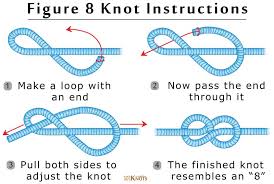
The Figure-Eight Knot is one of the most widely used knots in climbing and mountaineering.
Main Uses
- tying the rope into a climbing harness
- creating a secure loop
- joining ropes
Advantages
- very secure knot
- easy to inspect visually
- easier to untie after loading than many other knots
When tying a double retraced figure-eight, always ensure that the rope strands run parallel and the free end extends at least 10 cm beyond the knot.
This knot is considered the standard tie-in knot for climbers worldwide.
Overhand Knot
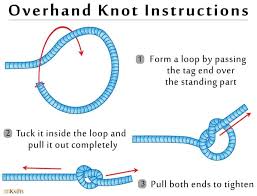
The Overhand Knot is one of the simplest knots used in climbing.
Common Uses
- joining two ropes
- connecting slings
- glacier travel braking knots
Although simple, it must always be properly tightened and secured.
Munter Hitch
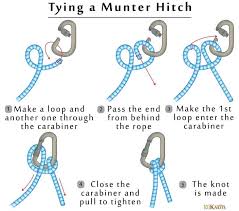
The Munter Hitch is an extremely useful knot for belaying or rappelling without a belay device.
Common Uses
- belaying a climbing partner
- emergency rappelling
- temporary rope braking
The knot works directly with a carabiner, making it very useful in emergency situations.
Clove Hitch
The Clove Hitch is widely used in climbing for quick attachment to anchors.
Typical Applications
- securing yourself at a belay station
- attaching rope to carabiners
- building anchor systems
One advantage of the clove hitch is that it can be easily adjusted even under load.
Anchor Hitch (Ankerstich)
The Anchor Hitch is used to attach ropes or slings to fixed points.
Typical Uses
- attaching slings to trees
- connecting rope to rings or bolts
- anchor building
It provides a reliable and stable connection to anchor points.
Prusik Knot
The Prusik Knot is a friction knot that grips the rope when loaded.
Common Applications
- backup safety during rappelling
- ascending a fixed rope
- crevasse rescue
- emergency self-rescue
This knot is widely used in mountaineering and rescue techniques.
Garda Knot
The Garda Knot acts as a mechanical rope brake.
Typical Uses
- pulley systems
- rescue hauling systems
- rope locking mechanism
It functions as a one-way rope brake, allowing movement in only one direction.
Basic Via Ferrata Safety Technique
In addition to knot skills, proper technique is essential when climbing via ferratas.
Correct Handling of Via Ferrata Carabiners
When moving along a steel cable:
- always keep at least one carabiner clipped to the cable
- move one carabiner at a time when passing anchors
- never unclip both carabiners simultaneously
These basic rules are fundamental for safe via ferrata climbing.
Essential Equipment for Via Ferrata
Besides knot knowledge, every climber should use proper equipment:
- via ferrata set with energy absorber
- climbing harness
- helmet
- via ferrata gloves
- appropriate footwear
Using certified equipment significantly reduces the risk of injury.
Frequently Asked Questions
Do you need to know knots for via ferrata?
For basic via ferrata routes, knot knowledge is not always required. However, understanding basic climbing knots is very useful for safety, emergency situations, and advanced alpine techniques.
What is the most important climbing knot?
The Figure-Eight Knot is considered the most important knot in climbing because it is used to tie the rope into a harness.
What knot is used for ascending a rope?
The Prusik Knot is commonly used for ascending a fixed rope or as a backup during rappelling.
Conclusion
Learning the basic knots used in climbing and via ferrata is an important step toward becoming a safer and more confident climber.
Even if you mainly climb protected ferrata routes, these knot techniques can be essential in emergency situations or more advanced alpine environments.
 FERRATA SLOVAKIA