
Difficulty Scale – Via Ferrata Difficulty Ratings
The assessment of via ferrata difficulty is based on normal conditions. However, objective factors such as weather, wet rock, ice, or other environmental factors may increase the difficulty. Subjective factors such as physical fitness, body height, climbing technique, and experience also influence how challenging a route may feel.
Many websites and guidebooks use the traditional Schall difficulty scale, which ranges from A (easy) to F (extremely difficult).
Another classification system is the K1–K6 grading system introduced by Eugen Hüsler, although today it is rarely used in guidebooks or online resources.
On our via ferrata map, routes are displayed using colored markers representing the following difficulty levels:
- A (K1) – B (K2) – Easy to moderate
- B/C – C – C/D (K3) – Difficulta
- D – D/E – E – E/F – F (K4–K6) – Very difficult to extremely difficult
Because many modern via ferrata guidebooks now use Arabic capital letters (A–E), this grading is also included where relevant.
Via Ferrata Difficulty Ratings
Easy (A and A/B)
Via Ferrata A
Via ferratas rated A are simple secured routes. Some sections may already be exposed, but they are generally easy to walk, often following ledges or wider rock bands.
The terrain is usually manageable even without the steel safety cable. In general, hikers who are sure-footed and not afraid of heights may not yet require full via ferrata equipment.
Example in Slovakia:
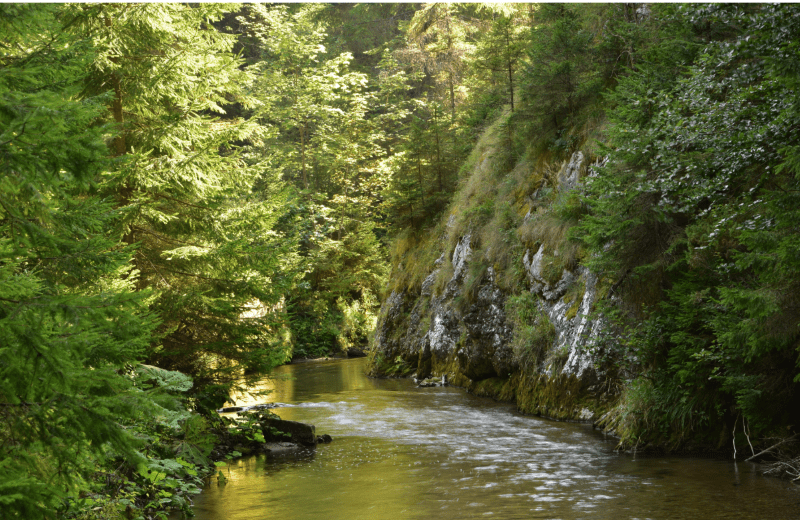
Via Ferrata Kyseľ – basic sections in Slovenský raj National Park
Moderately Difficult (B)
Via Ferrata B
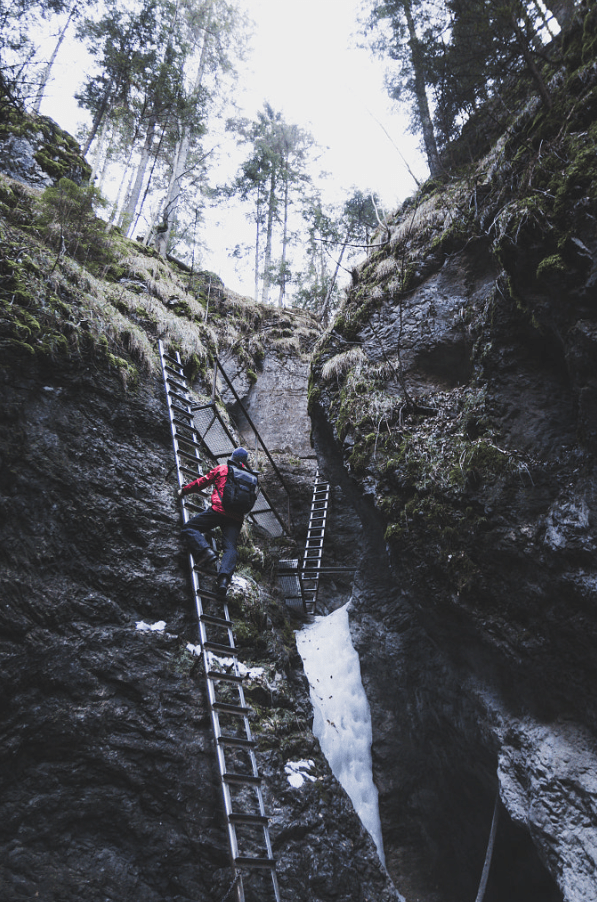
These routes involve steeper rocky terrain, where ladders, iron steps, footholds, or chains serve as additional climbing aids.
Without the safety cable, the climbing difficulty could reach approximately UIAA grade III. From this level onward, using via ferrata equipment is strongly recommended.
Example in Slovakia:
Via Ferrata Komín in Skalka near Kremnica
Difficult (B/C, C, C/D)
Via Ferrata C
Difficulty level C marks the beginning of the classic via ferrata climbing experience, usually through steep rock terrain.
A good head for heights and solid physical condition are required. These routes often include vertical sections protected only by a steel cable, and some passages can be physically demanding.
Without protection, some sections could reach UIAA grade IV.
Example in Slovakia:
Via Ferrata HZS Kysel – variant B/C
Very Difficult (D and D/E)
Via Ferrata D
For many recreational climbers, D-rated via ferratas represent the upper limit of their abilities.
Routes often pass through vertical or slightly overhanging terrain, and iron steps may be spaced far apart. Climbers need good strength, climbing technique, and experience.
Example in Slovakia:
Via Ferrata F-Údolná in Skalka near Kremnica
Extremely Difficult (E, E/F and F)
Via Ferrata E
This category is usually suitable only for very experienced climbers.
Via ferratas rated E or F require excellent strength, endurance, and complete comfort with exposure. These are highly athletic routes designed for advanced climbers.
Example in Slovakia:
Via Ferrata Výzva (Challenge) in Skalka near Kremnica, one of the hardest via ferratas in Slovakia.
Frequently Asked Questions
What is a Via Ferrata Difficulty A?
An example of an easy (A) via ferrata in Slovakia is the Via Ferrata Kyseľ in Slovenský raj, which is accessible to beginners with proper equipment.
What is a Via Ferrata Difficulty B?
A difficulty B example in Slovakia is Via Ferrata Komín in the Skalka climbing area.
What is a Via Ferrata Difficulty C?
A good example of a difficulty C route is Via Ferrata HZS Martinské hole, which offers several challenging vertical sections.
What is a Via Ferrata Difficulty D?
An example of a difficulty D route in Slovakia is Via Ferrata F-Údolná in Skalka.
What is a Via Ferrata Difficulty E?
An example of an extremely difficult (E) via ferrata in Slovakia is Via Ferrata Výzva in Skalka, designed for experienced climbers.

 FERRATA SLOVAKIA